
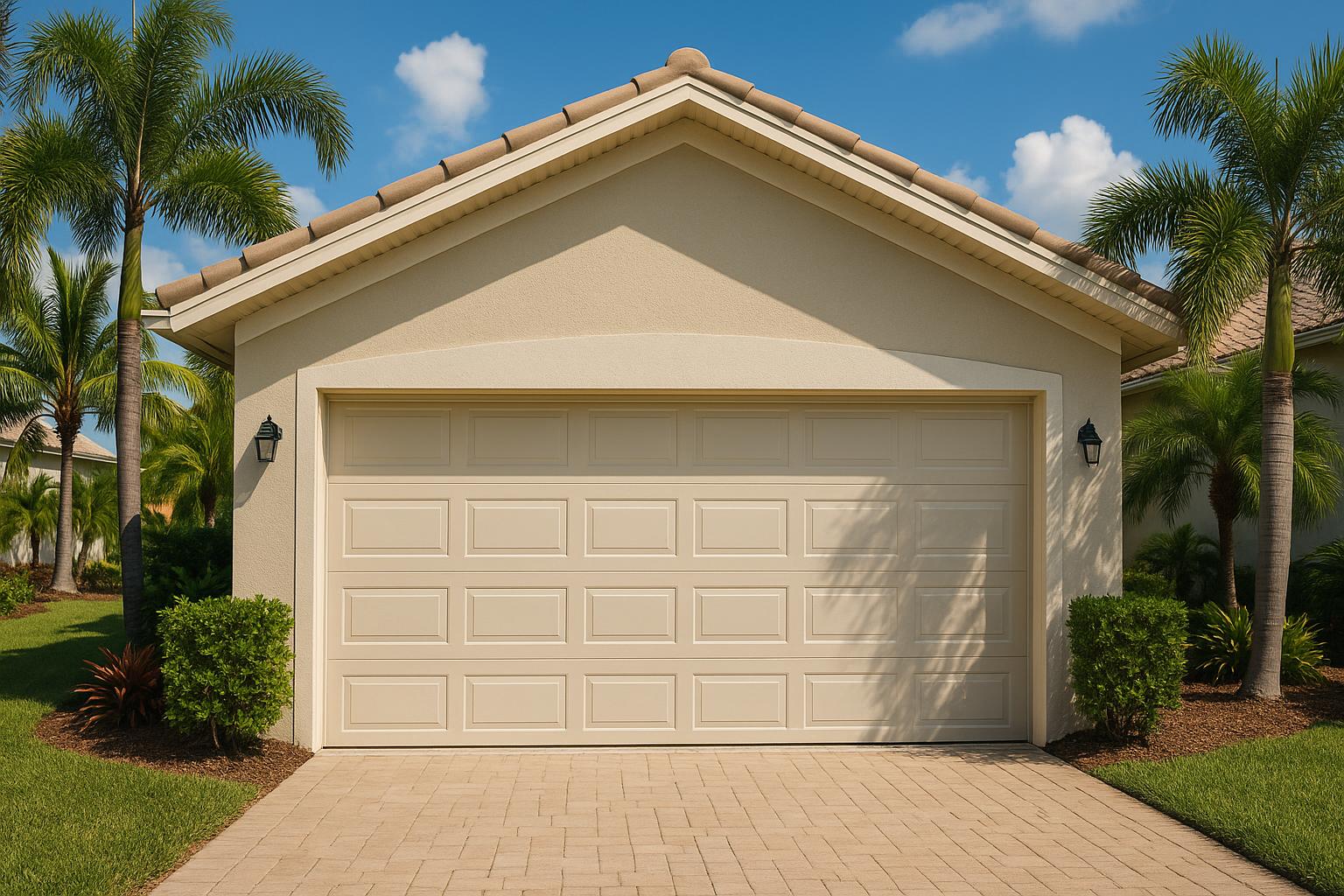
Your Garage Door Faces a Tough Climate in Southwest Florida
Living in Bonita Springs means enjoying sunshine, warm weather, and beautiful Gulf Coast scenery. But our tropical climate isn't always kind to the mechanical systems around your home — especially your garage door. Between the intense summer heat, year-round humidity, salt air, and seasonal storms, your garage door takes a beating that homeowners in cooler, drier climates simply don't have to worry about.
Understanding how Florida's weather impacts your garage door can help you catch problems early, extend the life of your equipment, and avoid costly emergency repairs. Here's what every Bonita Springs homeowner should know.
Heat and UV Exposure: More Damaging Than You Think
During the summer months, temperatures in Southwest Florida regularly climb into the mid-90s, and your garage door — especially if it faces south or west — absorbs that heat all day long. Over time, this constant UV exposure and thermal stress can cause several problems:
- Warping and expansion: Wooden garage doors are particularly vulnerable to heat-related warping. Even steel and aluminum doors can expand slightly in extreme heat, causing alignment issues with the tracks.
- Fading and peeling paint: UV rays break down paint and finish over time, leaving your door looking weathered and reducing its protective coating.
- Seal degradation: The rubber weatherstripping along the bottom and sides of your garage door can dry out, crack, and lose its flexibility after prolonged heat exposure. Once those seals fail, you're inviting water, pests, and hot air into your garage.
- Opener strain: When your garage gets extremely hot — and garages in Bonita Springs can easily reach 120°F or higher in the summer — your garage door opener works harder. Excessive heat can shorten the lifespan of the motor and its electronic components.
Humidity and Moisture: The Silent Destroyer
Florida's humidity is relentless. Even when it's not raining, moisture hangs in the air, and that constant dampness affects nearly every component of your garage door system.
Rust and Corrosion
The springs, hinges, rollers, tracks, and cables that make your garage door function are mostly made of metal. In a humid environment, these parts are prone to rust and corrosion — especially if they aren't regularly lubricated. Rusted springs are weaker and more likely to snap without warning, which is both dangerous and expensive to repair.
Mold and Mildew
Moisture can accumulate on and around your garage door, particularly along the bottom seal and inside the garage itself. This creates a breeding ground for mold and mildew, which can damage the door's surface and create unpleasant odors. Wooden doors are especially susceptible to moisture-related rot.
Electrical Issues
Humidity can also affect your garage door opener's circuit board and wiring. Condensation inside the motor housing can lead to short circuits, erratic behavior, or complete failure of the opener. If your garage door opener has been acting unpredictably — opening or closing on its own, or not responding to the remote — moisture intrusion could be the culprit.
Salt Air: A Coastal Concern
Bonita Springs sits just minutes from the Gulf of Mexico, and that proximity comes with salt-laden air that accelerates corrosion on metal components. Homeowners closer to the beach often notice their garage door hardware deteriorating faster than expected. Springs, tracks, and even the door panels themselves can show signs of salt damage within just a few years if they aren't properly maintained.
If you live in a coastal neighborhood, choosing garage door materials that resist corrosion — such as aluminum, fiberglass, or vinyl — can make a significant difference in longevity. Stainless steel hardware is another smart upgrade for homes near the water.
Storm Season: Wind, Rain, and Debris
Hurricane season runs from June through November, and even tropical storms that don't make direct landfall can bring powerful winds and heavy rain to Southwest Florida. Your garage door is often the largest opening on your home, making it a vulnerable point during severe weather.
- Wind damage: Standard garage doors may not be rated for high winds. A door that buckles or blows in during a storm can compromise your home's structural integrity by allowing wind pressure inside.
- Water intrusion: Heavy rain driven by strong winds can overwhelm worn weatherstripping and flood your garage, damaging stored belongings and the door's mechanical components.
- Debris impact: Flying debris can dent panels, knock doors off their tracks, or damage the opener mechanism.
If your garage door isn't wind-rated, it's worth considering an upgrade — especially since many insurance companies in Florida offer premium discounts for homes with hurricane-rated garage doors.
How to Protect Your Garage Door From Florida's Climate
The good news is that most climate-related garage door damage is preventable with regular care. Here are practical steps you can take:
- Schedule preventive maintenance at least once a year. A professional inspection catches rust, worn seals, weakened springs, and alignment issues before they become major problems. Many of our customers in Bonita Springs schedule maintenance in the spring, right before the most demanding months of summer and hurricane season.
- Keep moving parts lubricated. Apply a silicone-based lubricant to springs, rollers, hinges, and tracks every few months. This reduces friction, prevents rust, and keeps everything operating smoothly.
- Replace weatherstripping before it fails. Don't wait until you see water or feel hot air pouring into your garage. Inspect the seals around your door regularly and replace them at the first sign of cracking or gaps.
- Repaint or refinish your door as needed. A fresh coat of paint or sealant isn't just cosmetic — it provides a protective barrier against UV rays, moisture, and salt air.
- Consider upgrading to climate-appropriate materials. If your current door is aging and you're planning a replacement, talk to a local expert about materials and insulation options that are designed to handle Florida's conditions.
- Install a wind-rated door. For storm protection and potential insurance savings, a hurricane-rated garage door is one of the smartest investments a Southwest Florida homeowner can make.
Don't Wait for a Breakdown
Florida's climate puts your garage door under constant stress, and the damage it causes is usually gradual. A little rust here, a cracked seal there — these small issues add up until one day your door won't open, a spring snaps, or your opener gives out entirely.
At Bonita Springs Garage Door Experts, we help homeowners across Bonita Springs, Estero, Naples, Fort Myers, and Cape Coral keep their garage doors in top shape despite the challenging conditions. Whether you need a routine tune-up, a spring replacement, or a full door upgrade built for our coastal climate, we're here to help.
Give us a call to schedule a maintenance visit or get a free estimate. We show up on time, do the job right, and make sure your garage door is ready for whatever Florida throws at it.