
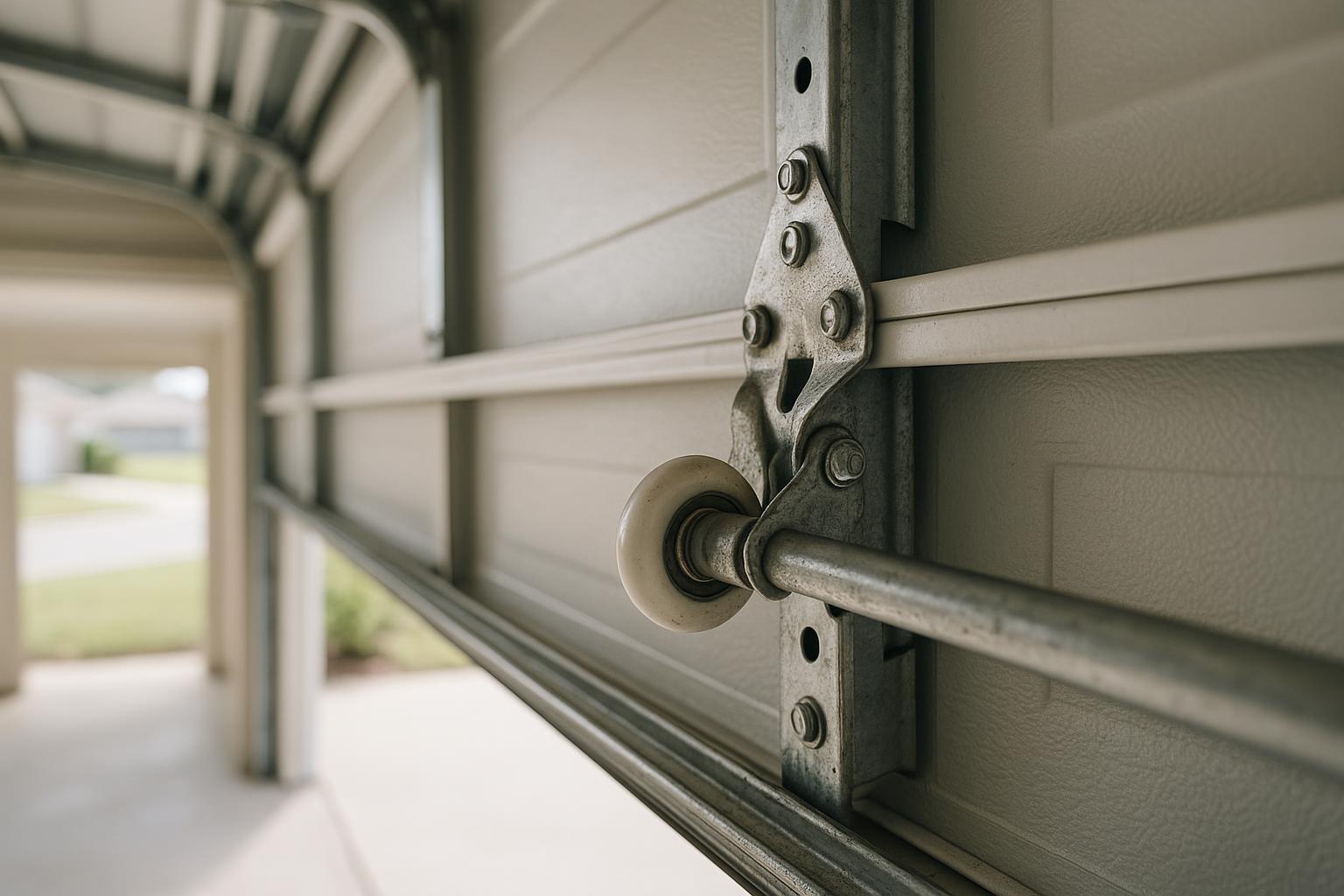
Your Garage Door Shouldn't Sound Like That
You press the button on your garage door opener, and instead of a smooth, quiet operation, you're greeted with grinding, squealing, popping, or rattling. If your garage door has started making unusual noises, you're not alone — it's one of the most common concerns we hear from homeowners in Bonita Springs.
The good news is that most garage door noises have identifiable causes, and many can be resolved before they turn into expensive repairs. The bad news? Ignoring those sounds almost always makes things worse. Let's break down what your garage door might be trying to tell you.
Squealing or Screeching Sounds
A high-pitched squeal when your garage door opens or closes is usually a lubrication issue. The metal-on-metal contact between rollers, hinges, and tracks creates friction, and over time — especially in Bonita Springs where heat and humidity accelerate wear — that friction produces an unmistakable screech.
Common causes include:
- Dry or worn-out rollers, especially metal rollers without nylon coating
- Hinges that haven't been lubricated in months (or years)
- The torsion spring system lacking proper lubrication
- Bearing plates or pulleys that need grease
In many cases, applying a garage door-specific lubricant to the rollers, hinges, springs, and bearing plates will quiet things down immediately. We recommend using a silicone-based or lithium-based spray — never WD-40, which is a solvent and not a long-term lubricant.
Grinding or Scraping Noises
Grinding sounds are more concerning than squealing because they often indicate a mechanical problem rather than simple dryness. If you hear a harsh grinding or scraping noise, your garage door may be dealing with one of these issues:
- Misaligned tracks: When the vertical or horizontal tracks shift even slightly, the rollers can scrape against the track edges instead of gliding smoothly through them. This is especially common after a minor impact or as mounting brackets loosen over time.
- Worn rollers: Nylon rollers eventually crack and deteriorate, while steel rollers can develop flat spots. Either way, compromised rollers create a grinding sound and uneven door movement.
- Opener gear issues: If the grinding seems to come from the motor unit itself, the drive gear inside your garage door opener may be stripped or wearing down. This is a frequent issue with older chain-drive openers.
Grinding noises rarely resolve on their own. If lubricating the moving parts doesn't help, it's time to have a technician inspect the system before a small misalignment turns into a door that jams completely.
Loud Banging or Popping
A sudden bang or pop from your garage door can be startling, and for good reason — it often signals a significant issue. The most common causes include:
- Torsion spring problems: As springs age and lose tension, they can shift on the torsion bar, creating a loud popping sound during operation. A spring that actually breaks will produce a sound like a gunshot — if that happens, stop using the door immediately and call a professional.
- Panel flex: Lightweight or older garage door panels can flex and pop as they move through the curved sections of the track, especially if the door is slightly unbalanced.
- Loose hardware: Bolts, nuts, and brackets vibrate loose over time. When they do, the resulting slack allows parts to shift and bang against each other during operation.
We recommend checking all visible hardware every few months and tightening anything that's come loose. However, spring-related issues should always be handled by a trained technician due to the extreme tension involved.
Rattling or Vibrating Sounds
A persistent rattle during garage door operation is usually the easiest noise to diagnose and fix. Common culprits include:
- Loose chain or belt on the opener — chains especially tend to develop slack over time and slap against the rail
- Loose nuts and bolts on the track brackets, hinges, or opener mounting hardware
- The opener itself vibrating against the ceiling — adding vibration-isolating pads between the mounting bracket and the ceiling can make a noticeable difference
Rattling might seem harmless, but consistent vibration accelerates wear on every component in the system. A few minutes of tightening today can save you a service call next month.
Rhythmic Clicking or Ticking
If you hear a steady click-click-click as your door moves, the rollers are the most likely source. Each roller passes over a rough spot, debris in the track, or a damaged section of the track itself, producing a rhythmic ticking sound.
Clean the tracks thoroughly with a damp cloth to remove dirt, cobwebs, and small debris. If the clicking persists, inspect the rollers for chips, cracks, or flat spots. Upgrading from standard steel rollers to 13-ball nylon rollers is one of the best investments you can make — the difference in noise level is dramatic.
When to DIY and When to Call a Professional
Some garage door noise issues are perfectly safe to handle yourself:
- Lubricating rollers, hinges, springs, and bearing plates
- Tightening loose bolts and brackets
- Cleaning the tracks
- Adding vibration pads to the opener mount
However, certain problems require professional expertise and specialized tools:
- Replacing torsion or extension springs
- Realigning or replacing tracks
- Repairing or replacing the opener's internal gears
- Rebalancing the garage door
- Replacing damaged panels or cables
Working with garage door springs and cables without proper training is genuinely dangerous. These components are under extreme tension and can cause serious injury if handled incorrectly.
Preventive Maintenance Keeps Things Quiet
The best way to avoid noisy garage door problems is to stay ahead of them with regular maintenance. We recommend that Bonita Springs homeowners schedule a professional tune-up at least once a year — ideally before the summer months when heat and humidity put the most stress on your system.
A thorough maintenance visit typically includes lubricating all moving parts, tightening hardware, inspecting springs and cables for wear, testing the door's balance, and checking the opener's safety features. It's a small investment that extends the life of your garage door and keeps it operating quietly and safely.
Don't Ignore the Warning Signs
Your garage door is the largest moving component in your home, and unusual noises are its way of asking for attention. Whether it's a minor squeal that needs lubrication or a grinding sound that signals a failing component, addressing the issue early almost always saves you money and hassle in the long run.
If your garage door is making sounds that concern you, Bonita Springs Garage Door Experts can diagnose the problem and get things running smoothly again. We serve homeowners throughout Bonita Springs, Estero, Naples, Fort Myers, and Cape Coral with honest assessments and fair pricing. Give us a call — we're happy to help you figure out what your garage door is trying to tell you.